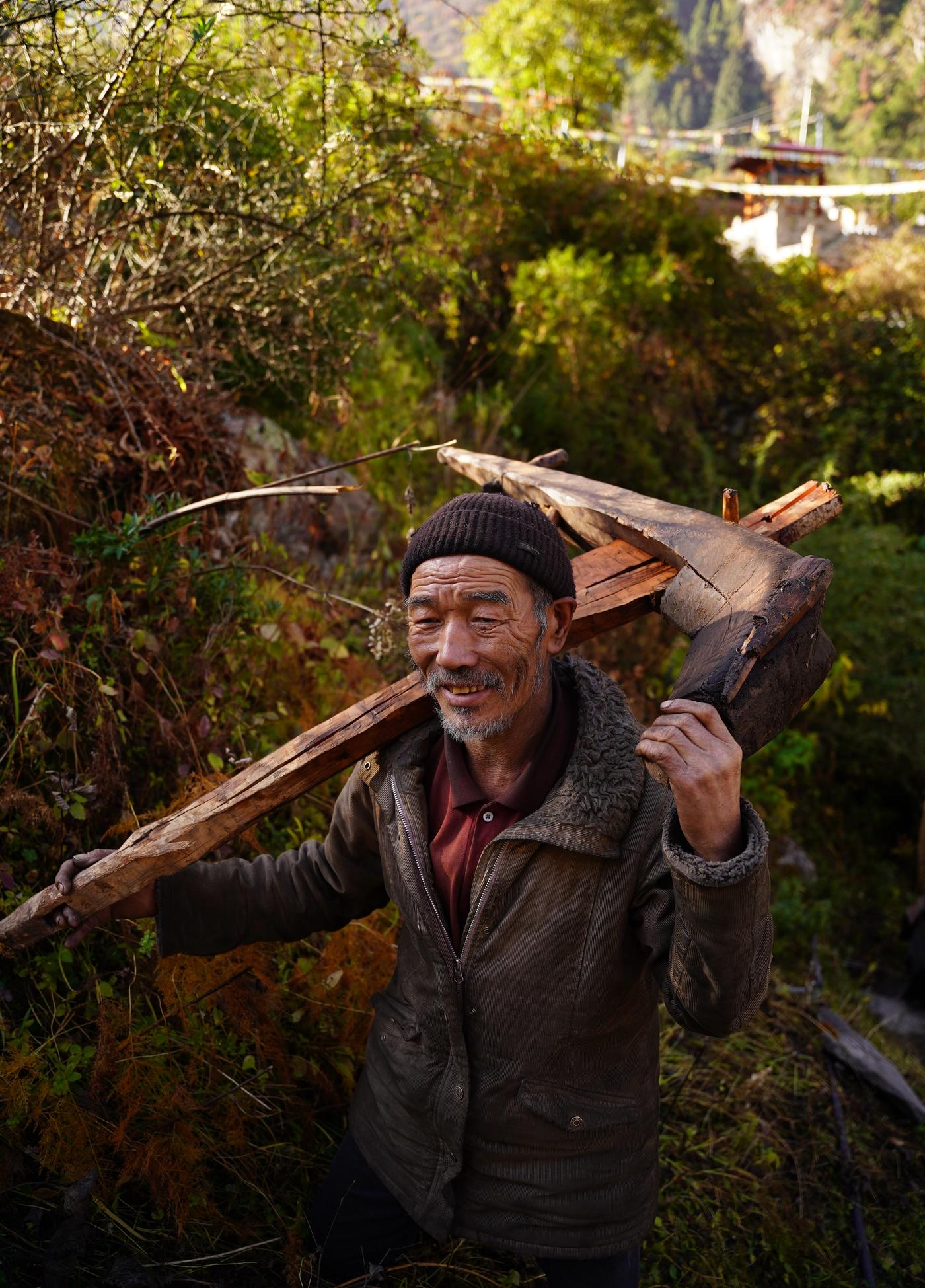
Nepal has a population of roughly 30 million people and 125 officially recognised ethnic groups. It has 123 languages spoken as mother tongues, six of which have more than a million speakers. It contains within its borders people whose cultural roots reach back to the Tibetan plateau, the Indian subcontinent, the indigenous hill communities of the middle ranges, and the Terai lowlands. It is, in this sense, not one country but a family of countries sharing a single map.
Most visitors to Nepal encounter almost none of this. They see Kathmandu, Pokhara, and the trekking trails, and they meet, primarily, the people who work in tourism — a relatively homogenous slice of Nepali society that does not represent the full range of who actually lives here.
Understanding even the broad outlines of Nepal's human geography changes how you travel through it.
The Newars are the original inhabitants of the Kathmandu Valley, the people who built the temples, the palaces, the intricate woodcarved windows, and the urban culture that makes the valley what it is. Their language, Newari, is unrelated to Nepali. Their festivals — Indra Jatra, Bisket Jatra, Rato Machhindranath — are the valley's great public events. To visit Bhaktapur or Patan and understand you are in a Newar city, not just a Nepali one, is to see the architecture differently.
The Sherpas, the community most associated internationally with Everest, are a Tibetan-origin people who migrated into the Solu-Khumbu region of eastern Nepal several centuries ago. They are Buddhist, they speak a Tibetan dialect, and they have a cultural identity entirely distinct from the Hindu hill communities further west. The Sherpa reputation for mountaineering skill is real but was constructed by specific historical circumstances — before 1950, Sherpas were farmers and traders, not climbers.
The Tamangs are the largest hill ethnic group in Nepal, spread across the middle hills surrounding Kathmandu. They were historically excluded from state power and used as porters and labourers, a history that is visible in their economic position today. Their Buddhism — distinct from Sherpa Buddhism in its practices and deities — is one of Nepal's lesser-known cultural traditions.
The Tharus are the indigenous people of the Terai lowlands, the flat southern belt that most trekkers cross quickly on their way to Chitwan or the airport. They developed an extraordinary natural resistance to the malaria that kept the Terai uninhabitable for most outsiders until the 1950s. Their culture — architecture, textiles, dance, fishing traditions — is one of the most distinctive in Nepal and one of the least visited.
The Gurungs and Magars of the western hills provided the majority of Gurkha soldiers to the British and Indian armies. The Rais and Limbus of the eastern hills have their own writing systems and oral traditions. The Newari-influenced communities of Bhaktapur still speak in dialects that differ from those of Kathmandu, fifteen kilometres away.
This is not academic information. It is the key to understanding why Nepal looks and feels different in every region you visit — why the food changes, the festivals change, the architecture changes, and the relationship between religion and daily life changes. What looks like one country is, in practice, a carefully maintained negotiation between dozens of distinct peoples, each with its own history and its own claim on the landscape.
The best way to encounter this diversity is to slow down and localise. Spend a night in a Tharu village homestay in the western Terai. Walk through the Tamang heritage trail north of Kathmandu rather than taking the direct route. Visit Bhaktapur on a weekday when the locals outnumber the tourists. Ask your guide where their family is from and listen to the answer.
Nepal is not one thing. You already know this. But understanding why is what turns a good trip into a remarkable one.