There is nothing dramatic about arriving at Lumbini. The land is flat. The sky is large and pale. The town outside the sacred garden is modest in the way that pilgrimage towns everywhere tend to be — guesthouses, restaurants, rickshaws, men selling marigold garlands at the gate. Nothing in the approach prepares you for what happens when you walk past the Ashoka pillar and stand at the edge of the sacred pool.
Siddhartha Gautama was born here in approximately 563 BCE, in a garden where his mother, Queen Mayadevi, stopped to rest during a journey. The pillar was erected by the Emperor Ashoka in 249 BCE to mark the site, making Lumbini one of the few places on earth where an ancient inscription and a modern archaeological excavation agree on exactly where something happened. The marker stone in the Maya Devi Temple, discovered in 1996 beneath layers of earlier temples, indicates the precise spot of the birth. You can stand three metres from it.
What you feel standing there depends on what you bring to it. If you are Buddhist, you are at the centre of your faith's origin. If you are not, you are in the presence of a fact — a real person was born on this ground, and the world has not been the same since. Both of these are worth sitting with.
The sacred garden itself is quieter than you expect. The Maya Devi Temple is the emotional core but the surrounding grounds — the sacred Puskarini pool where Queen Mayadevi bathed before the birth, the scattered ruins of ancient monasteries, the pilgrims walking barefoot on the brick path that connects the temple to the Ashoka pillar — produce a cumulative stillness that feels earned rather than designed.
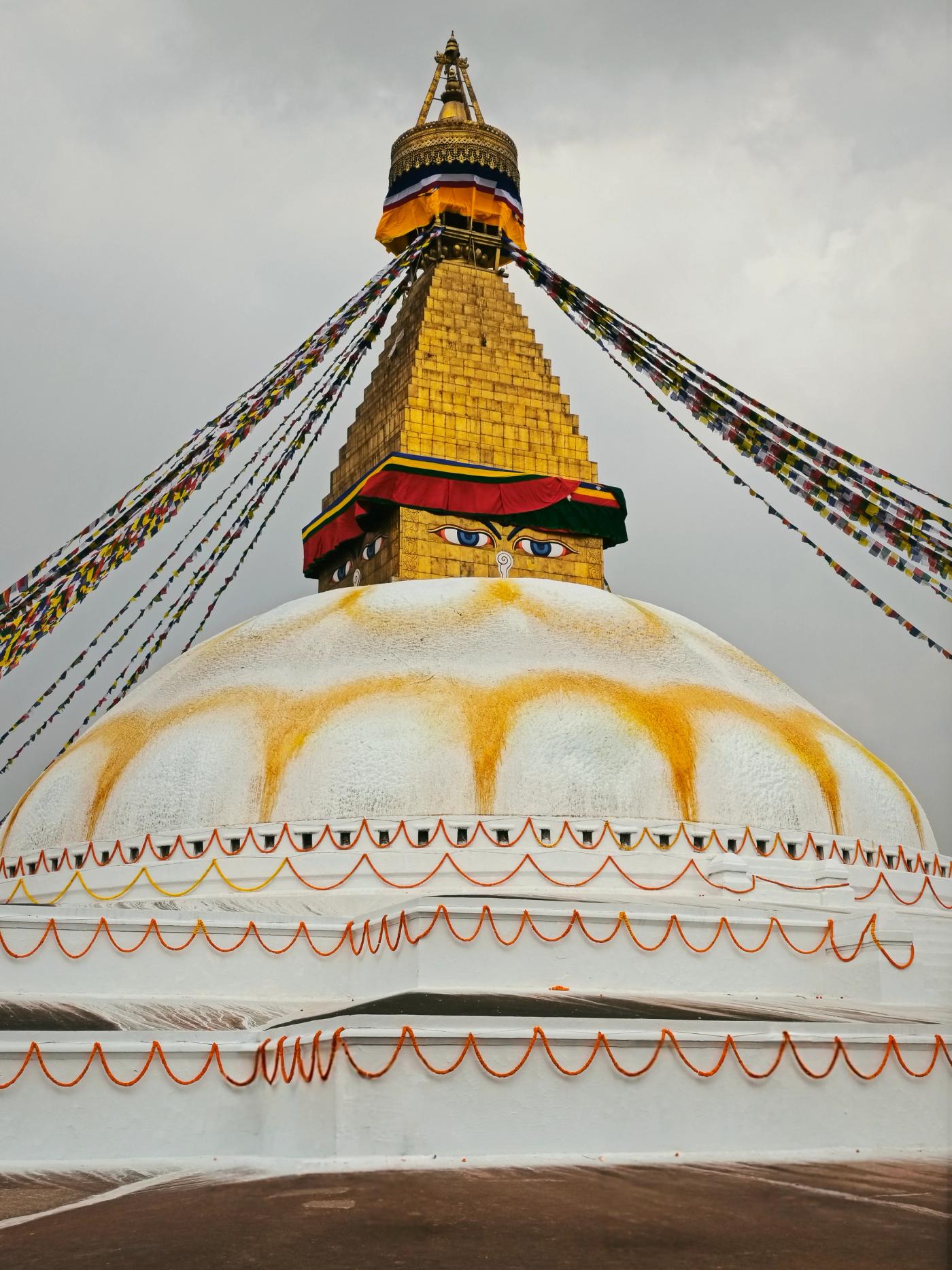
Beyond the sacred garden, the Lumbini Development Zone extends north along a central canal, lined on both sides with monasteries built by Buddhist nations from across the world. Each one is built in the architectural style of its home country: the Myanmar monastery in gilded Burmese style, the Vietnamese temple in red and gold with a seven-storey pagoda, the Japanese Peace Pagoda in white concrete above the canal, the Tibetan monastery behind high walls with a courtyard of prayer flags. Walking the full length of the canal — around four kilometres — takes the better part of an afternoon and produces the strange, moving experience of seeing one religion expressed in two dozen different architectural languages simultaneously.
Lumbini is not easy to reach. From Kathmandu it is a 45-minute flight to Bhairahawa, then a 20-minute drive. From Pokhara it is a four-hour drive or bus. Most Nepal itineraries skip it because it requires a dedicated day or two and sits in the flat Terai rather than the mountains that dominate the visual identity of Nepal travel.
This is a mistake, and it is a specific kind of mistake — the mistake of prioritising the photogenic over the significant. Lumbini will not produce the Instagram images that Everest Base Camp produces. It will produce something less shareable and more lasting: the feeling of having stood somewhere that genuinely matters, in a country that has more of these places than most travellers take time to find.
Spend at least two nights. Walk the monastery zone in the late afternoon when the light is low and the pilgrims are returning from the temple. Sit by the sacred pool in the early morning before the tour groups arrive. Let the flatness and the quiet do their work.