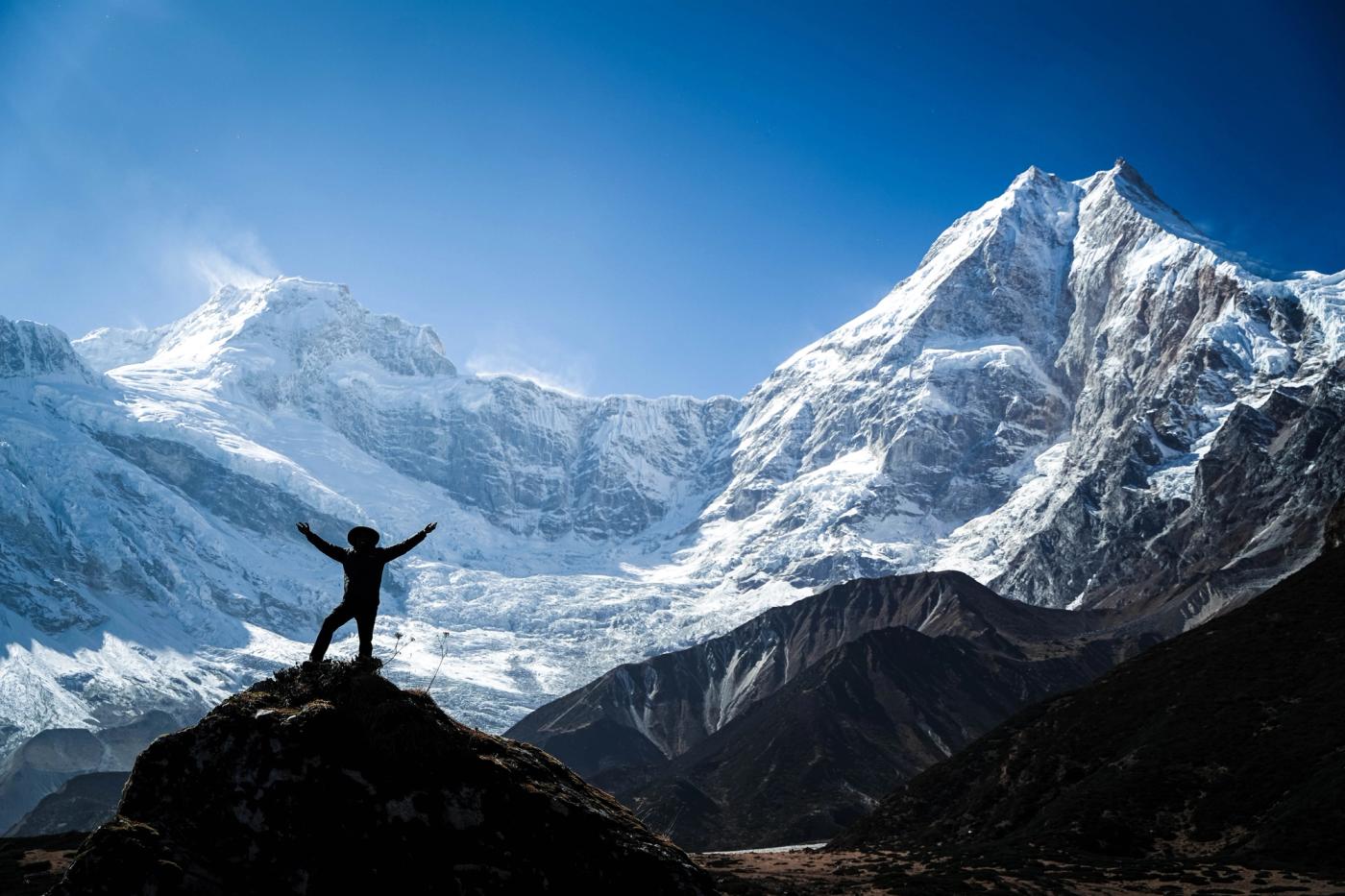
The first thing people say when they come back from the Manaslu Circuit is that it reminded them of what trekking in Nepal used to feel like. They mean this as a compliment. What they are describing is solitude — not emptiness, but the particular quality of a trail that has not yet been optimised for comfort, where you have to earn the views and the lodges run out of hot water and nobody has built a coffee shop at the pass.
Manaslu is Nepal's eighth highest mountain, 8,163 metres, sitting in the western part of the Gorkha district between Annapurna and Langtang. The circuit around its base — completing the loop over the Larkya La pass at 5,160 metres — is a 14 to 18 day route that requires a restricted area permit, a registered guide, and a degree of physical preparation that Everest Base Camp does not.
This is not a trail for a first-time trekker. It is a trail for someone who has done EBC or Annapurna, who knows how their body responds to altitude, who is comfortable with a teahouse that has no menu and four items, and who is specifically looking for what those classic routes no longer offer: the feeling of being somewhere that hasn't been fully discovered yet.
The circuit begins in Soti Khola, reached by a long jeep ride from Kathmandu through Arughat. The first few days follow the Budi Gandaki gorge north, a narrow path cut into rock faces above a river that runs milky green from glacial melt. The gorge is dramatic and claustrophobic in the best sense — the mountains close in from both sides and the trail is carved rather than built. You pass through villages where the architecture shifts gradually from Hindu to Tibetan Buddhist as you gain altitude.
By day six or seven, you are in Samagaon, a high village at 3,530 metres where Manaslu itself becomes visible for the first time. The mountain is enormous in a way that photographs do not prepare you for — not a distant peak but a wall, filling the northern sky, its south face a near-vertical kilometre of rock and ice. Most trekkers spend a rest day in Samagaon. The acclimatisation is real and necessary.
The Larkya La crossing — day eleven or twelve, depending on pace — begins before dawn. You leave in darkness by headlamp, climbing through moraine and snow toward a pass that sits above the clouds. The final push to the summit is steep and cold and slightly terrifying in the best possible way. At the top, in the thin air of 5,160 metres, with Himalchuli and Ngadi Chuli rising to the east and the Annapurna massif appearing to the west, you understand exactly why people come here instead of the more obvious routes.
The descent into Bimthang on the western side of the pass is one of the finest afternoons of walking in Nepal — a long, gradual return to lower altitude through high meadows and rhododendron forest, the worst of the exertion behind you, the mountains still visible above.
Manaslu is not getting easier to access. The permit system, the required guide, the limited number of lodges — these are features, not bugs. They are what keep it what it is. If you are thinking about doing it, the time to go is now, before the infrastructure catches up.