Nepal produces extraordinary photographs almost by accident. Point a camera at the Himalayan horizon at sunrise and something memorable will appear. But the images that last — the ones that don't look like the other ten thousand Nepal photographs online — come from less obvious places, at less obvious times, with more deliberate intent.
Here are eleven locations that reward photographers willing to go slightly off the expected path.
Bhaktapur's Pottery Square, early morning. The square comes alive before 8am, when potters set their wheels and the light is still low and golden. The combination of clay, smoke, wood carvings, and human activity produces a density of visual interest that no other square in the valley matches. Arrive before the tourist buses.
Pashupatinath's eastern bank, at dawn. The cremation ghats on the western bank draw most photographers. Cross the river to the eastern bank and look back. The composition — ghats, smoke, temple spires, pilgrims, and the light of the burning pyres — is more complex and less exploited than any straight-on shot of the ghats themselves.
Poon Hill, but stay after sunrise. Every trekker is at Poon Hill for sunrise. Most leave by 8am. Stay until 9:30, when the clouds build and begin to wrap the Annapurna massif in ways that the flat pre-sunrise light doesn't allow. The light also falls differently on Dhaulagiri from the east side of the viewpoint, which most visitors never reach.
Lo Manthang, Upper Mustang, at any time. The walled city of Lo Manthang is the only place in Nepal where the landscape is genuinely Tibetan — ochre walls, flat roofs, prayer flags against a sky of almost Alpine clarity. The light in Mustang is sharper and drier than anywhere else in Nepal because the region sits in the rain shadow of the Annapurnas. Every hour produces a different photograph.
Indra Chowk market, Kathmandu, midday. The bead and thanka sellers of Indra Chowk work under natural light that floods down between the buildings in shafts. The density of colour — red glass beads, saffron cloth, painted masks — combined with the available light makes this one of the most productive midday shooting locations in the city, at an hour when most photographers have given up.
Nagarkot, winter sunrise. In December and January, the air is at its clearest and the Himalayan panorama from Nagarkot extends from Dhaulagiri in the west to Kanchenjunga in the east on clear mornings — a chain of peaks spanning nearly the entire breadth of Nepal. The town itself, largely abandoned in winter, produces good foreground interest.
Thamel's backstreets at blue hour. The tourist strip of Thamel is visually chaotic. One block back, the old Newar neighbourhoods produce quiet lanes, carved wooden windows, and the blue-hour light catching stone paving in ways that suggest a city four centuries older than the one most visitors see.
Chitwan, jeep safari, golden hour. The tall elephant grass of Chitwan at 5pm catches the light in a way that makes the landscape glow from within. Add a rhino grazing in the middle distance and you have one of the most painterly wildlife compositions Nepal produces.
The Thorong La pass, Annapurna Circuit, looking south. Most Thorong La photographs point north toward the descent. Turn south and the view back into the Kali Gandaki gorge — the deepest valley on earth — opens below you, with the Annapurna south face filling the left side of the frame.
Boudhanath stupa, just before closing time. The evening ritual at Boudhanath — monks circumambulating the stupa as the bells ring and the butter lamps are lit — produces warm, intimate light and a depth of human activity that the busy midday tourist hours do not. Arrive at 5:30pm.
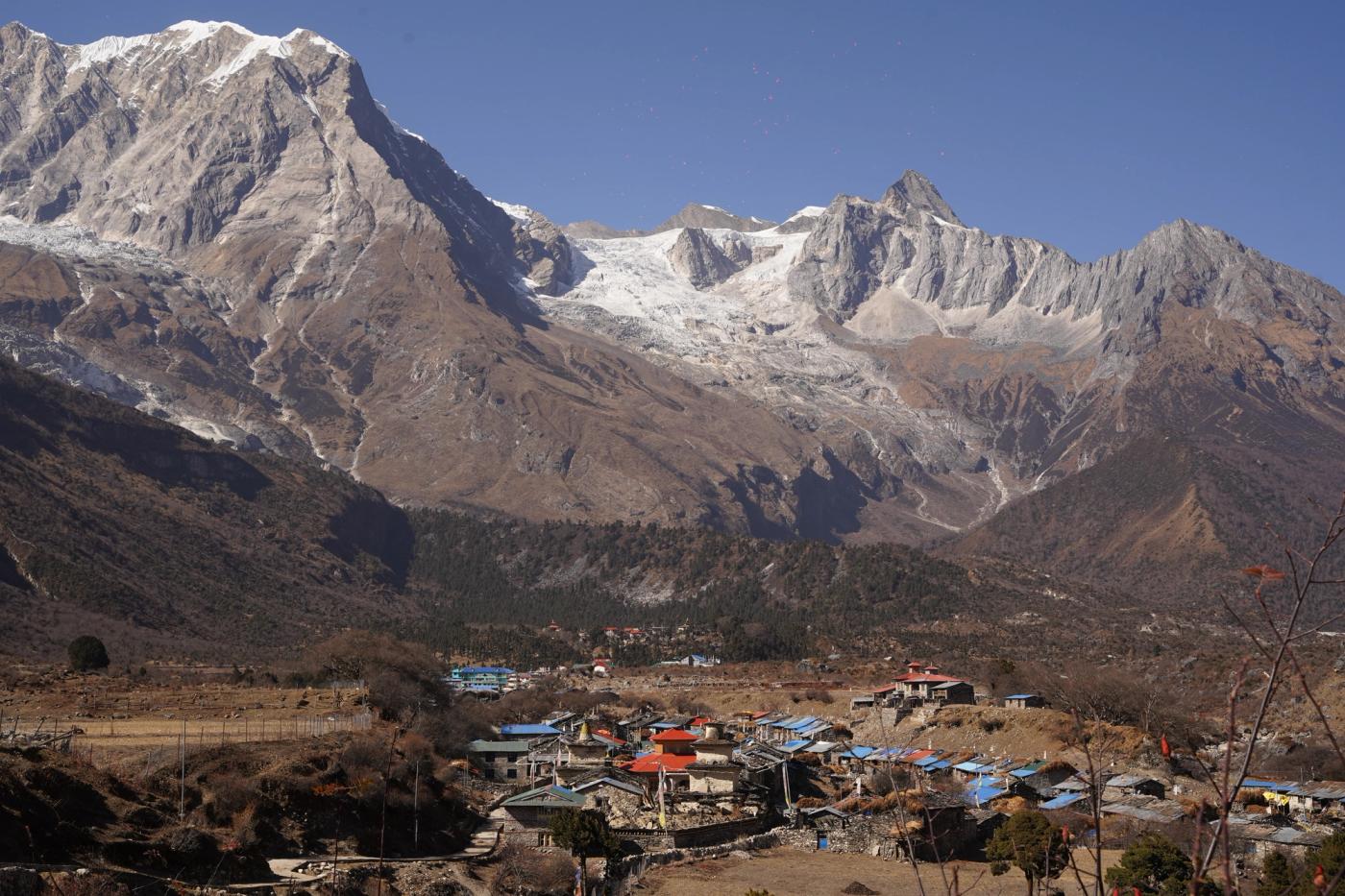
The Langtang valley, any clear day. Langtang remains undervisited despite its proximity to Kathmandu. The valley floor — flat, wide, framed on three sides by glaciated peaks — produces landscape photographs that look nothing like the gorge-and-trail images that dominate Nepal's visual identity. The yak pastures in the upper valley are particularly good in early morning.
The through-line of all eleven locations is the same: arrive early, stay late, and go one step further than most visitors bother to.